A beautiful gift: ‘Words to Sing the World Alive’ Edited by Jasmin McGaughey & the Poet’s Voice

What do ‘first language’ or ‘mother tongue’ mean to you? The language you were born into? The first words you learnt? The language you think in, dream in: the way you see your world?
For most people, they are all of those things, and more.
Words to Sing the World Alive is a celebration of language: specifically, some of the many hundreds of First Languages that existed in Australia before European colonisation.
On their website, the publishers University of Queensland Press describe it this way:
Words to Sing the World Alive celebrates First Nations languages from across the continent. Forty First Nation writers and thinkers, journalists and lawyers, artists and astronomers come together to reveal their favourite and significant words. Words that evoke the power of childhood and the wonder of Country; that explore the essence of mother, of fire, of time. Words that are imbued with family and belonging, and that surprise with their connections.
UQP websitePerhaps unsurprisingly it is also a lyrical collection of great beauty and depth. Each of the short contributions offers a gem, something to consider deeply, something to learn by. Each language reflects the culture and world view of its speakers. Language can help us to deep dive into ways of seeing the big questions of life, the meaning of it, what comes before and what comes after.
Here is one of my favourite quotes from the book (and believe me, it was hard to narrow it down as there are many beautiful words, phrases, sentences and paragraphs in this slim volume):
But it’s on the tongue where this language [Wiradjuri] sings the world alive. Any one word can feel like a story, a narrative in small syllables. An arrangement of breath where my body and spirit inhabit. The muscles on my face are clunky, learning the shapes carved by rivers, known by sky. I was raised in English, and so I am finding my way back to myself through this sun-warmed language. Journeys through time, forward and back, held by language, held by Country.
Jazz Money, in Words to Sing the World Alive, p10This book reflects the language revitalisation projects taking place around the country, where endangered languages are being revived, new life breathed into words and concepts that might otherwise fade forever.
Such endeavours are so important, to reclaim what has been lost from over two hundred years of loss, forced removals from Country, separation of people from family, culture, language.
My recommendation is to take this book slowly, dipping into one or two contributions at a time. You can better savour the words offered and their stories better that way. And if you can, do so with the Australian Institute of Aboriginal and Torres Strait Islander Studies Map of Indigenous Australia handy (online version available through their website here.) This will help with the geographic context of each of the languages being discussed.
As a non-indigenous Australian who loves words, I also consider the book to be yet another generous gift of great beauty from First Australians to the wider Australian community, if we care to receive it.
Words to Sing the World Alive was published by University of Queensland Press in 2024.


Island life: ‘Spirit of the Crocodile’ by Aaron Fa’Aoso & Michelle Scott Tucker with Lyn White

A middle-grade story about a youngster growing up on Saibai Island in the Torres Strait, this well-told yarn skilfully introduces aspects of daily life and the unique Torres Strait culture in a lively and relateable way.
Ezra is twelve, and he and his best mate Mason love their life on Saibai, where they fish, go to school, play sport, learn Island dance and song, and try (sometimes unsuccessfully) to stay out of trouble.
But the school year is drawing to a close and next year they must leave Saibai and travel to Thursday Island, where the nearest high school is located. This means being away from home and family for much of the year. While Mason is keen for the adventure, Ezra is not so sure. Why can’t everything just stay as it is?
Then trouble arrives with a dangerous, out-of-season storm combined with a surprise high tide that hits the island. It poses a threat to everything Ezra holds dear – his home, even his loved ones. And he and Mason are called on to help out in the emergency. Can Ezra measure up to the expectations? It’s a scary time and even the adults around him are troubled by this disaster. Is this another result of climate change, along with the rising sea waters that may eventually swallow their beloved island?
The story opens with the excitement of a crocodile spotted on the island’s jetty. The crocodile is the totem of Ezra’s clan – Koedal – and as the novel progresses, he draws strength from the knowledge that his totem animal represents ancient power and toughness.
Readers will learn much about aspects of Torres Strait culture and traditions: food, dance, ceremony, the importance of family and community connections and ties that keep individuals strong. It’s fantastic to see a book for younger readers that focuses on a First Nations community about whom many Australians might know relatively little.
My one disappointment is that there is minimal language other than English used in the narrative. As most people in the Torres Strait speak at least two, if not three, languages fluently, it would have been a great opportunity to introduce more words from Torres Strait Creole and the Saibai language of Kala Kawa Ya.
I have a personal interest in this book and its subject matter: I spent some time on Saibai back in the 1980s and my son is a member of the Koedal clan through his father’s people. So naturally I was interested in the portrayal of the island life today and from a youngster’s perspective.
I found Ezra’s character entirely relateable to any twelve-year-old facing the challenges of growing into the teenage years, facing major change, family complications, and environmental challenges.
He makes mistakes, but by the end of the novel he has learnt some valuable lessons about himself and importantly about others and his community. He learns that it feels good to be involved and to work with others to help make things right again after the storm. He also learns that the right thing to do is usually pretty obvious.
Spirit of the Crocodile is published by Allen & Unwin in 2025.
The ‘other’ indigenous Australians: ‘Growing up Torres Strait Islander in Australia’ Edited by Samantha Faulkner

The ‘Growing Up’ series is a fabulous suite of books published by Black Inc Books, each of which ‘captures the diversity of our nation in moving and revelatory ways.‘ (Black Inc Books)
NB: Aboriginal and Torres Strait Islander people are advised that the book contains names and images of, as well as writing by, people who have died.
Previous titles in the series include: Growing Up Asian, Growing Up Aboriginal, Growing Up In Country Australia, Growing Up Queer…all designed to allow for the sharing of lived experiences by people who make up today’s Australia.
This latest edition is a collection of short pieces by Australians with Torres Strait Islander heritage – sometimes referred to as ‘the other Indigenous Australians.’
The Torres Strait Islands are located between the tip of Cape York Peninsula in far north Queensland, and the coast of Papua New Guinea. Torres Strait Islanders have a unique culture and a fascinating history. They are traditionally a sea-faring (or salt water) people, though of course in the past hundred years or so many have moved south to live on mainland Australia.
The pieces in this volume, educed by poet and author Samantha Faulkner, include stories about well-known people (such as Eddie Koiki Mabo, whose High Court challenge overturned the lie of ‘terra nullius’) or actor Aaron Fa’Aoso. It also includes names I was unfamiliar with. Young and older people. Those living in Torres Strait Island communities and those who have never been there, having lived all their lives on the mainland.
The stories say a lot about how culture and language are maintained, how precious childhood memories can fuel pride in culture, the many barriers that faced Islanders in the past and those encountered today, and how cross-cultural influences have contributed to the rich tapestry of Australian life: many contributors have ancestry that also includes mainland Australian First Nations, Malay, Japanese, Filipino, among others.
Together they paint a picture of the extraordinary depth and range of spiritual beliefs, languages, dance and other cultural practices that make up the vibrancy of the Torres Strait Island people.
If, like many Australians, you had never heard of or knew much about this corner of Australia, or its people, grab a copy of this book and learn! It’s a great read and very accessible. I’d love to see a copy in every public and school library across Australia.
Growing Up Torres Strait Islander in Australia is published by Black Inc Books in 2024.


Indigenous Literature Week 2020


This week, 5 – 11 June, is Indigenous Literature Week, celebrating the richness of fiction, non fiction, poetry, memoir and biography authored by Aboriginal and Torres Strait Island Australians. Of course, July is also NAIDOC time, during which events are usually held to mark the culture, history and achievements of indigenous Australians. Due to Covid-19 restrictions in 2020, NAIDOC events will be planned for November.
But we can still safely honour National Indigenous Literature Week in July. To find out more about NAIDOC and Indigenous Literature Week, check out these links.
Over at ANZ LitLovers LitBlog, there is a wonderful list of titles by indigenous authors in both Australia and New Zealand that could serve as a good launching point for anyone wanting to read more indigenous authors. And below are links to books that I have posted about here on my blog. I would recommend each of these books; they all have something special.
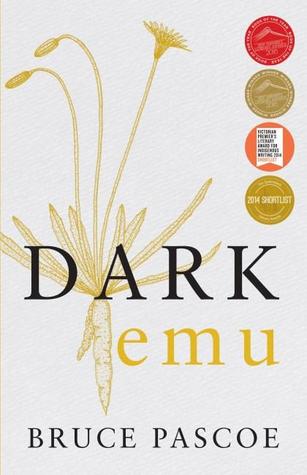
Dark Emu by Bruce Pascoe
Taboo by Kim Scott
Tell Me Why by Archie Roach
Terra Nullius by Claire G Coleman
Too Much Lip by Melissa Lucashenko
The White Girl by Tony Birch
The Yield by Tara June Winch
SongSpirals by the Gay’Wu Group of Women#IndigLitWeek


