Resilience and friendship: ‘The Bird in the Bamboo Cage’ by Hazel Gaynor

This novel introduced me to a previously unknown story of WWII : the experience of teachers and pupils at a Protestant boarding school in northern China while under Japanese control. The students, children of missionaries, business people or diplomats from around the world, received a traditional British-style education including the classics, religious instruction and preparation for English university study.
After Japan’s invasion of China in 1937, school life continued largely as before for a time, until the Japanese attacked Pearl Harbour in 1941. Overnight, citizens of the US and the British Empire became enemy aliens and everything changed at Chefoo School. They were, suddenly, prisoners of war. They were moved twice; firstly to another location in the town and later to Weihsien Internment Camp, where they were kept captive for two years until liberation by US soldiers in 1945.
The author heard about these events and knew this was a story she wanted to write. The novel’s characters are her own creations but she researched accounts of internment and pored over the archives from Chefoo School, to write an authentic and moving account of people living through great hardship and fearful times with humour, compassion and resilience.
The story centres around a teacher, Elspeth Kent, and three pupils who are young girls at the novel’s opening but teenagers by the time of liberation. Nancy, known as ‘Plum’ to her friends, is the child of missionaries and, even before her capture by the Japanese, had not seen her parents for three years. For someone like me, not familiar with the boarding school system, that seems an incredible time for a child to be without her parents. Nancy and her friends endure an additional four years under the most testing of circumstances.
What holds the children and teachers together are their friendships and the teachers’ steadfast adherence to maintaining a sense of safety and unity, and what we might think of as a ‘stiff upper lip.’ Or, as Miss Kent puts it,
I closed my eyes and absorbed the simple familiarity of the moment: chalk dust on my fingertips, the pool of winter sunlight against my cheek, the sounds of singing and instruction drifting along the corridors. Routine and discipline. The glue holding me together while the world was falling apart.
The Bird in the Bamboo Cage p25Told through alternating viewpoints of Miss Kent and young Nancy, we see the circumstances under which the school community must survive deteriorate rapidly; the brutality of some of the Japanese guards; the tragic experiences of the local Chinese communities.
There are two potent themes throughout: sunflower seeds and the Girl Guides. The seeds are given to Miss Kent by the school’s Chinese gardener just before they are moved from the campus. She plants a seed at various locations throughout the story, one in each place they are interned and in remembrance of specific people.
She resolutely keeps the rituals of the Guides alive for the girls in her charge, as a way of holding onto meaningful traditions for her pupils, and to follow the teachings of the Guides about honourable and right behaviour and deeds, despite the suffering and cruelty around them.
One interesting character who really was at Weihsien Internment Camp is Eric Liddell, the Scottish Olympic athlete on whom the film Chariots of Fire was based. He was held captive at the camp and sadly died there before the prisoners were liberated. There is a memorial at the location where he was buried.
Both Miss Kent and Nancy come to realise that freedom can be taken away from without but not from within. Nancy’s version of this understanding is this:
For the first time since we’d been under Japanese guard, I understood that freedom wasn’t something I had to wait for, but was something I could choose. In my mind, in my imagination and my memories, I could be as free as the birds that raced the wind, as free as the clouds that chased the sun far above me.
The Bird in the Bamboo Cage p277The Bird in the Bamboo Cage is a beautifully told story of loss and courage, the strength of the human spirit, and the bonds of friendship.
It is published by HarperCollins Publishers in September 2020.
My thanks to the publishers for a copy to read and review.Historical fiction in a vivid setting: ‘The Sea Gate’ by Jane Johnson

Following the death of her mother, Becky begins the sad task of sorting through her things. Among the unopened letters she finds an envelope post-marked from Cornwall that will change her life forever. In it is a desperate plea from her mother’s elderly cousin, Olivia, to help her save her beloved home…
The Sea GateThe Sea Gate is a dual-timeline story: the historic storyline is about wartime Cornwall and 16 year old Olivia, and the modern day one involves Rebecca, the adult daughter of Olivia’s cousin. I enjoy novels that bring together past and present in this way and this one is no exception.
I especially loved the setting of this book, having travelled to Cornwall and been enchanted by its dramatic rock-strewn coastlines, picturesque fishing villages and brooding moors. They provide a wonderful backdrop for a tale with plenty of family secrets; an old rambling house full of mysteries; intrigue and danger; past wrongs and a dash of romance.
Becky sets herself the task of restoring Olivia’s neglected family home to some semblance of habitability, so that her elderly cousin can come home from hospital. In the process she finds herself piecing together the secrets of Olivia’s past, especially events that took place during the war.
She also re-examines her own life and makes some surprising decisions about her future; she is a cancer survivor, still recovering from surgery and treatment and the shock of her illness:
Fear has trapped me, rendered me immobile and powerless: fear of losing Eddie, fear of the cancer, fear of everything, really. I’d forgotten I ever had wings, let alone how to use them.
The Sea Gate p304This was for me the most satisfying part of the novel: the emotional development of Rebecca’s character and her trajectory of self-discovery and change.
The one part that didn’t work so well for me was the chapter in which Hamid tells his story. An important secondary character, his story is a good one, so it is perhaps simply personal taste that meant I didn’t enjoy his first-person narrative inserted into the the story in this way. It did not, however, detract from my overall enthusiasm for The Sea Gate.
It’s an engrossing read, recommended for anyone who enjoys historical fiction, dual timeline stories and an evocative, dramatic setting.
The Sea Gate was published by Head of Zeus Publishing in June 2020.
My thanks to the publisher for a review copy.
Fabulous tale of derring do from Australia’s colonial past: ‘Ten Rogues’ by Peter Grose

I am a lover of history in all it’s forms, though I have sometimes wondered how my interest in Australian history survived my school years in the 1960’s and 70’s, with the dry recitations that passed for history back then. I learnt about early European explorers and their ‘discoveries’, the names of people – usually men – of note, something about the Depression and the World Wars. But not enough – not nearly enough – of the humans who populated these past eras – their strivings, motivations and follies. Where, oh where, were the dramas, the absurdities, the outrageous injustices and outright comedies, the incredible feats of resilience and courage that peppered our past?
In more recent years there have been some wonderful works of fiction and non-fiction that have brought this human part of history into sharper focus. From the Edge: Australia’s Lost Histories by Mark McKenna springs to mind, as do excellent podcasts such as Forgotten Australia by Michael Adams or The History Listen from ABC’s Radio National. Fled by Meg Keneally is a novel based on the astounding escape from Sydney by convict Mary Bryant; Esther by Jessica North tells the story of the woman who arguably managed and controlled one of NSW’s first large agricultural estates. And there is now, thankfully, plenty of literature to tell us the stories from indigenous Australia – non-fiction such as Archie Roach’s Tell Me Why and Bruce Pascoe’s Dark Emu; and fiction, including this year’s Miles Franklin awarded The Yield by Tara June Winch.
Ten Rogues is subtitled The unlikely story of convict schemers, a stolen brig and an escape from Van Diemen’s Land to Chile. As the title promises, it is both a rollicking good tale, and a well-researched true- life adventure. The convict at the centre of the tale is Jimmy Porter, a man who must surely have possessed the proverbial ‘nine lives’ to have escaped the multiple death sentences he faced over his career as a criminal and teller of tall tales. The author acknowledges that Jimmy’s penchant for exaggeration and blurring the truth made the research more difficult (the book is based, in part, on judicious selection from Jimmy Porter’s own accounts of his actions, as well as other contemporary narratives, convict records and newspapers, and some additional delving in Chile.)
The book weaves all of these together with information on the history of convict transportation to Australia, the grim conditions in penal stations such as Tasmania’s Sarah Island, the historic links between the slave trade and transportation, and eighteenth and nineteenth century debates about crime, punishment and prison reform. It does so in a very readable way, because apart from anything else, the story of Jimmy Porter and his band of escapees is one of luck and misfortune, unwise choices, incredible feats of endurance and courage, and moments of humour and bravado, that might be seen as very unlikely, if they appeared in a work of fiction.
These are the stories from our past – the funny, the ugly, the tragic, the astounding – that for me, make history so irresistible. Read this book for a rollicking good tale and to learn more about Australia’s colonial and convict periods. It delivers both in an entirely absorbing package.
Ten Rogues was published by Allen & Unwin in 2020.
Peter Grose is the author of several other books about episodes in Australian history including A Very Rude Awakening (about the raid on Sydney harbour by Japanese mini-submarines during WWII) and An Awkward Truth (about the bombing of Darwin in 1942). These promise to be just as intriguing as Ten Rogues and are now on my Want To Read list.#AussieAuthor20
#2020ReadNonFicLearning from the youngsters: ‘Loveless’ by Alice Oseman

YA (young adult) fiction is something I have only recently begun to read (since I was a young adult myself, I mean – and that was… well, some years ago now.) I’ve been intrigued and I admit, a little surprised at how much has changed in novels for this target audience. For a start, the language is different: much more ‘colourful’ and very influenced by the brevity of social media posts and also by some ‘Americanisms’. What has not changed is the way that these novels can explore the issues that are front and centre of their young readers’ lives.
This is what Loveless does, in an interesting and sensitive way. The themes of this novel by Alice Oseman include the challenges faced by young people as they explore their sexuality, begin to navigate the adult world, and face new challenges outside of home and school life. At its heart is friendship, of utmost importance to all people in this age group.
The story centres on Georgia and her best friends Pip and Jason as they begin university life. There are the usual nerves at the threshold of a big step like this, but for Georgia there is also confusion and anxiety. She longs for a romantic relationship and can’t understand why she has not been able to find someone she is attracted to. Is she gay? Bisexual? What does it mean to be asexual? Is that even a thing? Or is she just shy, preferring to watch a romcom or read fanfic to going clubbing?
Georgia envies her room-mate, Rhooney, who seems to be able to make friends easily, exudes confidence and has a robust social and sexual life. However she comes to realise that Rhooney, too, has her own secrets and struggles.
After some unsuccessful attempts to meet boys she would want to date, Georgia reflects:
I thought I’d understood what all these romantic things would feel like – butterflies and the spark and just knowing when you liked someone. I’d read about these feelings hundreds of times in books and fanfic. I’d watched way more romances than was probably normal for an eighteen-year-old.
But now I was starting to wonder if these things were made up.
Loveless p139We dive right in to the university experience with Georgia and her friends: clubs and societies, college life, formal balls and pub crawls, student mentors, too much alcohol. The story is unflinching about the lengths youngsters will go to, in order to fit in, and to find romance and/or sex.
One delight is the reference to Shakespeare: the group are all avowed Shakespeare fans and work to put on a performance with scenes chosen from some key plays. In doing so they highlight the relevance of some much of Shakespeare’s work to our modern world with scenarios that are still recognisable today : romance, social gaffes, sexuality and gender fluidity, for example.
I learnt a lot about the lives of young people today but was also reminded of my own nerves and fluster at beginning university, not knowing anyone and shy to make friends. Alice Oseman is a skilful novelist to be able to evoke memories while illuminating the current lay of the land for young adults.
Loveless will be published by HarperCollins Children’s Books in
August 2020.My thanks to the publisher for a copy to read and review.
A heartfelt search for the truth: ‘The Other Side of Absence’ by Betty O’Neill

The Other Side of Absence is Betty O’Neill’s debut memoir. The author information tells us that she is a writer and teacher in areas such as writing family history, the Cold War, migration and the domestic space as an archive. This wonderful book includes all of these themes, and more.
She begins by explaining her unusual family situation. Her mother Nora, a young Australian woman on working holiday in England in 1952, met and fell in love with Antoni (Tony), a Polish political refugee. Tony had joined the remnant Polish army under British command in Italy at the end of the war, but later moved to England where he worked for a time at the Bata Shoe Company. (That company name rang bells for me; Bata school shoes were de rigueur for Aussie kids in the 1960’s and 70’s but I didn’t know it was a British company.)
Tony was older, well dressed and charming. After a brief courtship they married and soon Nora was pregnant with Betty. Nora’s mother sponsored Tony to emigrate to Australia and in 1954 Nora and Betty moved to Lismore, NSW, to live with her. Tony arrived eight months later. Within days, he had disappeared: gone from their lives with no word of explanation. Betty did not meet her father until she was nineteen – a troubling connection with a damaged and troubling man – and soon after that he returned to Poland. She never saw him again.
It is with this family background that Betty navigated life as a young adult, but not until later did she begin the search for her father’s story. Who was he? What did he experience as a member of the Polish resistance during the war, and then as a political prisoner at three Nazi concentration camps? What damage was inflicted on him during this time? Why did he marry her mother but then desert his wife and infant child? What motivated him to make contact with Betty when she was nineteen? What about her Polish family – who were they and what stories did they have to tell about their lives and about Tony?
These questions took her to Poland and Austria to retrace her father’s history, his movements and experiences during the war, his life once he returned to Poland from Australia. There were many surprises and troubling revelations in store for Betty as she dug deeper into the past. In the process Betty faced the impact of her father’s experiences on her own life:
I attempted not to judge anyone, particularly not my father, but my knuckles were white holding onto the see-saw of emotions, trying not to fall off…
The Other Side of Absence p183-184
I knew that crush of feeling unwanted. I had felt it when each of my parents left me..It never leaves when it is imprinted onto a tiny heart. A shaft of darkness was embedded from deep within me to just under the skin. It painfully broke through from time to time. I could easily recognise it in others.The author’s research and personal visits to significant wartime sites, add depth and authenticity to this story of discovery and growing understanding. She describes the feeling when she saw her father’s prisoner card from Auschwitz concentration camp – in a small way I have experienced a similar thrill at finding my ancestors’ names on convict muster lists from the nineteenth century, although of course the emotional punch was much less in my case. She also reflects on the way trauma plays out from one generation to the next. Her conclusions are beautifully nuanced:
Not knowing and wondering had been replaced by understanding and acceptance in ways I could never have predicted. The past no longer haunted my present. I’d come to an appreciation of human complexity: not good or bad but layered by circumstance and context.
The Other Side of Absence p288-289This memoir, like others I have read (such as Magda Szubanski’s Reckoning, or Esther Safran Foer’s I want you to know we’re still here), illuminate the present by examining the past.
The Other Side of Absence is a beautifully written, engrossing and heartfelt addition to Australian memoir.The Other Side of Absence is published by Impact Press in August 2020.
My sincere thanks to the publisher for a copy to read and review.#AussieAuthor20
#2020ReadNonFic
##AWW2020A WWII story with a focus on women: ‘The German Midwife’ by Mandy Robotham

Along with writing historical fiction, Mandy Robotham delivers babies. She is an experienced midwife – and it shows in this, her debut novel. The story opens in a Nazi labour camp during WWII, where Anke, the midwife of the book’s title, is imprisoned for helping pregnant women in the enforced Jewish ghetto of Berlin.
Immediately we are plunged into the darkness, despair and filth of the camp, where giving birth is another trial to be faced by exhausted women weakened by harsh conditions and malnutrition. Having endured labour and birthed a child, their babies are ripped from their arms to be murdered by the guards. This is not a war story where miracles happen and people live happily ever after.
Then Anke is transported from the camp and taken to a mansion high in the mountains, which we learn is the Berghof, Hitler’s luxury Bavarian complex. She is to be midwife to none other than Eva Braun, Hitler’s mistress. This is the what if? question at the heart of the novel: if Hitler had fathered a child, what might that have meant for the Reich, the progress of the war, and the victims of that war – including the midwife and her family, who are all at the mercy of the Nazis and their leader?
At a deeper, more personal and profound level, the question becomes: how should a person act in such circumstances? What is the right choice: to care for a woman and her innocent child, or to sacrifice either or both for the greater good?
The stakes are high for Anke as she navigates her way through this treacherous territory. There are flashbacks to her loving family before the war, her work in a Berlin hospital as the Nazis ramp up their cruelty and their control of the nation, and to Anke’s actions which lead to her arrest and imprisonment in the camp. There are examples of the various ways in which ordinary people coped and survived in a world that had become savage and unforgiving. Anke’s dilemma underlines everything from the moment she is chosen to be Eva Braun’s midwife:
I didn’t know whether to be grateful for my life chance, or angry at her naivety. A thought flashed, ‘a child within a child,’ and I forced a smile in response, while every sinew in me twirled and knotted.
The German Midwife p62One thing that makes this novel stand out from others set during WWII and the Nazi regime, is that childbirth, and the midwives who assist, are the central points around which the story spins. Against a backdrop of widespread death and destruction, the descriptions of birthing are a welcome shift of attention to the act of creation of new life. The midwifery expertise of the author lends great credibility to these scenes: they are believable; never once do they feel gratuitous. The birthing scenes are there for a reason and they anchor the protagonist to a reality other than the one presented by war. Anke reflects on this:
I soon realised my role – and that of the ten or so other qualified midwives in the camp – was to bring dignity where we couldn’t prolong life. We could create memories, perhaps of only hours or days, where kindness and humanity won out…
The German Midwife p280
Each of us had our way of creating a small world impenetrable to the harsh reality of noise and stench around us. It was a tiny cosmos where we cried and laughed with them, where we held a space – perhaps only for a few minutes – so pure that only their child, their baby, existed for that time. Their history. The burning ache of a child’s parting was no less painful, but alongside the sadness sat memories of what they did for their babies – memories of being mothers.The German Midwife has plenty of tension as the pregnancy of Eva Braun plays out, and plenty of drama. At its core, though, is an invitation to ask ourselves: What would I do, if this were me? What is the right choice in a world where every decision is fundamentally flawed?
It’s a gripping read with the experience of women at its heart.The German Midwife is published by Harper Collins Australia in
August 2020.
My thanks to the publishers for a copy to read and review.Hardship and misdeeds on Victoria’s goldfields: ‘The Goldminer’s Sister’ by Alison Stuart

Alison Stuart lives in an historic town in Victoria and it shows in her writing. The Goldminer’s Sister is her second novel featuring places and events from Australia’s past. Set in a fictional 1870’s Victorian goldfields town of Maiden Creek, the author conjures the dirt, noise, hard living conditions and gold fever of the times brilliantly. Even more impressive are her descriptions of the mines themselves – the never-ending thud of the ‘stampers’, the ever-present risk of mine collapse, the dark tunnels following the gold seams.
Around this rich background she has woven a story of greed, loss and love. The protagonist is Eliza, who arrives from England after the death of her parents, hoping to be reunited with her beloved brother Will. Arriving at Maiden’s Creek, she is greeted by her uncle Charles Cowper and the news that Will died in a recent fall at the mine. Shocked, Eliza realises she is now alone in the world and work out how she is to support herself.
She meets many of the town’s inhabitants; those who have made good money through mining and those less fortunate who live on the edges of the community. Alec McLeod is a mining engineer who works at her uncle’s mine. He has his own sorrows and secrets, but events bring them together as both Alec and Eliza begin to suspect that Will’s death might not have been an accident.
Stuart has conjured the atmosphere of ‘gold fever’ well – the way the prospect of instant unbelievable wealth drew people from all backgrounds to try their luck at mining. Crime flourished, and if the risk of mining accidents was not enough, there was also the threat posed by bushrangers who roamed the trails between the goldfields and Melbourne or other bigger towns. The author does not flinch from portraying the grim reality of life for those who don’t strike it lucky: the prostitutes, sly grog dealers and children from poor families for example.
Eliza is a sympathetic character whose circumstances are less than ideal but who nonetheless shows courage and compassion throughout.
The Goldminer’s Sister is a satisfying novel with intrigue, action and a dash of romance set amidst a compelling and dramatic chapter of Australian history.
It was published by Mira, an imprint of Harlequin Enterprises (subsidiary of HarperCollins Publishers Australia), in July 2020.
My thanks to the publisher for a copy to read and review.#AWW2020
#AussieAuthor20A (sometimes confronting) personal and social history: ‘A Particular Woman’ by Ashley Dawson-Damer

I may have only two things in common with the author of this memoir: we are both women, and have both experienced grief and trauma in our lives. I can think of a long list of ways in which we are different: family background, political views, life experiences. So it’s perhaps not too surprising that for much of the time while reading A Particular Woman I felt a certain alienation from its author – or at least, from her representation of herself. Having said that, the book is an interesting read, partly because it’s a journey through Australian life in the 1960’s, 70’s and 80’s and up to the present time.
I’ll start with the blurb on the back cover:
Embracing the excitement and turbulence of sixties Sydney, Ashley is set to make her mark amid uni classes filled with ambitious young males. She imagines her future with a successful career, husband, and a house full of children.
But life is never quite that easy.As a university graduate with a degree in economics (unusual for a woman at that time) Ashley travels to London and Canada, marries, and lives with her new husband as an expat in the Philippines, Singapore, Nigeria and Argentina. Later, as a single parent, she supports her young children through work as a model; eventually find love and security and a country lifestyle, before venturing into a role in the arts world as a member of various boards. Throughout the years she comes up against tragedy, hardship and profound grief.
I admit to a certain amount of distaste for aspects of her life, or at least for the way she describes them. She recounts jobs with a large tobacco company with no apparent reflection on the evils of this industry. Similarly, her descriptions of her life as an expat in countries with high levels of poverty hint at a limited awareness of the position of relative privilege held by monied, white youngsters in countries previously colonised and often pillaged by the West. Several interactions between various friends and some local people struck me as shameful, but are recounted by the author with no apology or reflection.
Dawson-Damer seemed to move through the world as a young, blonde, beautiful woman with an apparent line up of men ogling her and wanting to take her to bed. I found this uncomfortable reading.
However, I decided to regard this memoir as a first hand account of the times in which she lived. Australia, as with much of the world, was undergoing a period of great change; upheavals as economies and societies transitioned from the post-war era to a modern day understanding of issues like imperialism, racism, and sexism. As an example: while completing her economics degree, it was still the custom to hold a ‘Miss Economics’ competition in the faculty! And as the author puts it:
Work was opening up for me, and yet women in the workplace had to be careful. We knew not to catch lifts alone with certain men; there’s no denying it, in those days we were fair game.
A Particular Woman p36Dawson-Damer’s life did not play out as expected. She was to endure loss and hardship and several transformations of her own life before reaching a place of acceptance and stability. I warmed to her more as she recounted these difficult times and the way she dealt with them. I could admire her hard work, tenacity and commitment to whatever challenges she set herself. Her philosophy is best summed up in these words:
We must celebrate life. Not just our own, but the life we have with others. Most of us are going to have difficult times dished up to us. The awful times are balanced out by the good times. If we are lucky, we will survive the tragedies that might occur and go on to be stronger…Suffering mellows us. It makes us humbler and wiser. It adds steel melded with compassion to our strength.
A Particular Woman p235The book is illustrated with a collection of photographs from different times in her life. I would have enjoyed knowing more about the people and places in some of these, but they were a welcome addition, helping to bring her story alive.
A Particular Woman is a story of resilience against a backdrop of a changing Australia, and would hold plenty to interest readers who enjoy first-hand accounts of interesting lives such as
Ashley Dawson-Damer’s.A Particular Woman will be published in July 2020 by Ventura Press.
My thanks to the publisher for a copy to read and review.#AussieAuthor20
#AWW2020Indigenous Literature Week 2020


This week, 5 – 11 June, is Indigenous Literature Week, celebrating the richness of fiction, non fiction, poetry, memoir and biography authored by Aboriginal and Torres Strait Island Australians. Of course, July is also NAIDOC time, during which events are usually held to mark the culture, history and achievements of indigenous Australians. Due to Covid-19 restrictions in 2020, NAIDOC events will be planned for November.
But we can still safely honour National Indigenous Literature Week in July. To find out more about NAIDOC and Indigenous Literature Week, check out these links.
Over at ANZ LitLovers LitBlog, there is a wonderful list of titles by indigenous authors in both Australia and New Zealand that could serve as a good launching point for anyone wanting to read more indigenous authors. And below are links to books that I have posted about here on my blog. I would recommend each of these books; they all have something special.
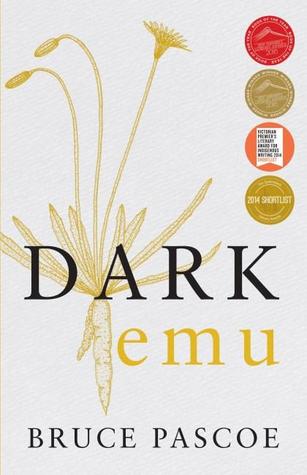
Dark Emu by Bruce Pascoe
Taboo by Kim Scott
Tell Me Why by Archie Roach
Terra Nullius by Claire G Coleman
Too Much Lip by Melissa Lucashenko
The White Girl by Tony Birch
The Yield by Tara June Winch
SongSpirals by the Gay’Wu Group of Women#IndigLitWeek
Another Australian ‘living literary treasure’: Helen Garner and her book ‘Everywhere I Look’

I’m late to this book (published by Text Publishing in 2016) but I’m an avowed Helen Garner fan, especially her non-fiction, which Everywhere I Look is: a collection of short anecdotes, musings, essays, film and book reviews, and a catalogue of everyday incidents in the life of an author who has made observing and recording a daily habit. In the hands of someone as skilled as this, the everyday become poetic, luminous, full of beauty, humour and mystery.
These were qualities of other books I’ve read by Garner: Joe Cinque’s Consolation, This House of Grief, The Spare Room, and of course the classic Monkey Grip, among others. How does she do this – write about the ordinary and the extraordinary in ways that make both seem familiar or, at least, understandable?
The second-last piece in this book, titled ‘The Insults of Age’, should be a must-read for any woman approaching mid to later life (and their partners, family and friends.) Her warning to thoughtless (younger) folk who might presume to act towards older women as if they are invisible, stupid, deaf or helpless, is one of several paragraphs that made me chuckle.
There were, as well, moments when I gasped in recognition of the situation described and at the beauty and simplicity of the prose, such as in the piece describing her mother and their relationship. ‘Dreams of Her Real Self’ also made me weep a little. There is this:
When, in the street, I see a mother walking with her grown-up daughter, I can hardly bear to witness the mother’s pride, the softening of her face, her incredulous joy at being granted her daughter’s company; and the iron discipline she imposes on herself, to muffle and conceal this joy.
Everywhere I Look, p94And these sentences, describing a photo of Helen as a baby in her mother’s arms, which capture the other side of the parent-child relationship:
I am six months old. I am still an only child. She is carrying me in her arms. She is strong enough to bear my weight with ease. I trust her. She is my mother, and I am content to rest my head upon her breast.
Everywhere I Look p105There it is – the entirety of the complicated bond between parent and child in a handful of understated or pared-back sentences. Who could say more, or more beautifully?
A wonderful offering from a living literary treasure.